
Spinal surgery is among the most demanding fields in medicine, as procedures are performed in close proximity to vital neurological structures such as the spinal cord. Surgeons therefore require not only extensive experience, but also continuous training and the ability to adopt new techniques.
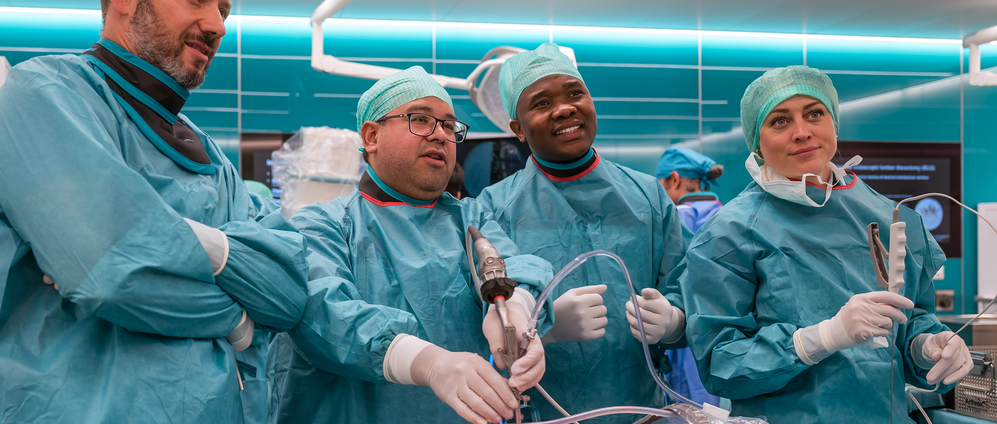
One technique that is rapidly gaining relevance is endoscopic spine surgery. As a minimally invasive approach, it allows surgeons to visualize and treat delicate spinal structures through a miniature camera introduced via a rigid working channel often smaller than one centimeter. The endoscope integrates a camera, fiber optic light source, surgical instruments, and an irrigation system to ensure clear visualization and precise treatment.
Compared to open surgery, this approach causes less trauma to surrounding tissue and offers clear patient benefits, including faster recovery, shorter hospital stays, reduced infection risk, less postoperative pain and opioid use, and minimal scarring. However, these advantages come with high technical demands. Surgeons must navigate using a monitor rather than direct visualization, and the procedure requires advanced hand–eye coordination. As a result, spinal endoscopy has a steep learning curve and demands structured, intensive training to ensure patient safety.
To make this technique more widely accessible, surgeons need specialized and standardized education pathways. In March 2026, the University of Zurich, Balgrist University Hospital, and the EndoSpine Academy will offer such a pathway at the OR-X. For the first time, participants of the graduate program "Certificate of Advanced Studies (CAS) in Spinal Endoscopy" will take part in specialized hands-on courses designed to build a solid foundation in this technique.
